Canon nFD 17mm F4
Ultra Wide, Ultra Vintage…
Canon nFD 17mm F4 @ F4 on my EOS R
This is one I was never expecting to get due the the speed of the lens and the generally high price one of these in good condition these go for as a consequence of the Canon FD “blow up” that has happened in the late 2010’s. For the sake of rounding out my large FD collection and because the reviews for the RF 16mm F2.8 were less than stellar to say the least, I decided to pick one of these while I was in Japan last on a work trip. I was fortunate to get a “mint” condition nFD version of the 17mm F4 for under $400 USD when accounting for the yen exchange rate in Dec. 2025 which is a good price these days for a “mint” condition one. I usually go for the breech-lock older FD SSC lenses whenever the optics formula hasn’t been updated for the better. What’s interesting though with this 17mm the optical formula was identical between the FD SSC version and nFD version which I was kinda surprised to discover as I would have thought Canon would have updated since it was one of the early FD lenses offered before the SSC coating designation was introduced in 1973. (the first FD lenses arrived in 1971) The nFD is considerably lighter than either of it’s early breech lock versions. The lens is quite compact overall and almost identical in size and weight to the 20mm F2.8 in either of its SSC and nFD variants when compared to each other.
Canon nFD 17mm F4 @ F4 on my EOS R
The lens has a lot of character, as I would expect from a fairly ultra-wide angle vintage prime lens. Overall sharpness and resolution are pretty good even wide open in the center 1/3 of the frame but the minute you start to move to the edges both start to drop off pretty dramatically wide open. (again not unexpected for a vintage 17mm lens like this) Although contrast is decent the lens suffers from a pretty quick drop on contrast as soon as a bright light source enters the frame or blasts in from just off frame. The lens produces some very fun prismatic rainbow flaring with the sun off to either side of the shooting frame as it rakes the lens at a 45° angle from one side of the lens to the other. When being more directly backlight by a bright source right down the center, the lens’s flare takes on a fun purple-blue-teal rendering that is quite distinct.
Canon nFD 17mm F4 @ F4 on my EOS R
Same shot as above but with a 175% center crop (3840 × 2560) to better showcase the distinctive flare.
The purple-blue-teal flare appears like clockwork in almost every on of my strongly backlight shots that have a bring source reaming down the center of the lens. It is always accompanied by a little faded red-magenta point flare kinda like the eye of Sauron which looks quite fun but is definitely a bit distracting.
Canon nFD 17mm F4 @ F4 on my EOS R
Same shot as above but with a 200% crop to show the detail of the flare.
Aside from the strong flaring artifacts the lens handles fringing well with surprisingly low chromatic aberrations on bright transition subjects and minimal visible fringing in transition zones too. Color is good and seems to be a very good match to many FD lenses of the time.
Canon nFD 17mm F4 @ F4 on my EOS R
Same shot as above but with a 200% crop to show detail.
The lens has a relatively smooth and pleasing out of focus rendering although nothing ever gets too far out of focus unless you are right up against your main subject near minimum focus. It exhibits what is typically expected for vintage wide angle lenses - “soap bubble” bokeh that becomes more apparent toward the edges of the frame and also is more visible in bright out of focus specular highlights.
Canon nFD 17mm F4 @ F4 on my EOS R
Overall the lens holds up well to strong backlight images with a warm organic flare showcasing its vintage design and coatings. It is exactly what you would expect if you’ve used other wide angle FD lenses from the era. The relatively complex nature of constructing such a wide angle lens for full frame means there are a lot of elements for light to bounce off of in the lens which is the culprit behind the rather distinct and obvious flares - to be precise the lens has 11 elements in 9 groups again sharpness is good in the center of the lens but performance drops off quite substantially toward the edges unless you stop down.
Canon nFD 17mm F4 @ F4 on my EOS R
The lens has a relatively short close focus distance as is common with many wide angle primes although its usefulness is debatable considering how close you have to get to the subject can be limited, especially if your light source is coming from behind camera. Overall close focus performance holds up well with good contrast and resolution even at 0.25m/~10”.
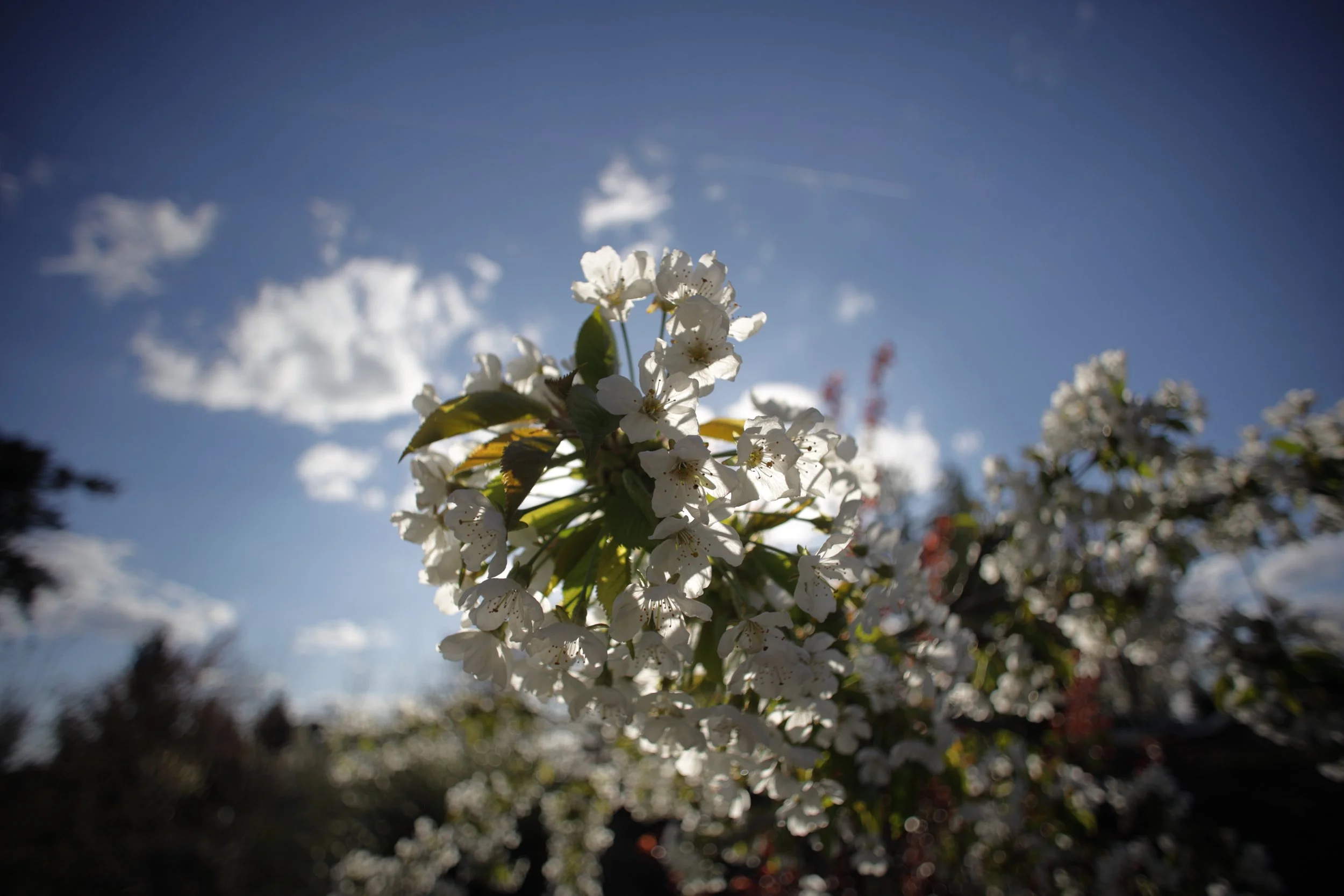
Canon nFD 17mm F4 @ F4 on my EOS R
One thing that the lens does suffer from is some rather pronounced vignetting at the corners when shot wide open at F4. Again nothing too extreme or surprising for a vintage ultra-wide angle lens without any kind of lens correction profile to benefit from digital corrections that have become the norm for many modern “digital era” ultra-wide angle lenses that now come with “un-defeatable” correction profiles.
Canon nFD 17mm F4 @ F4 on my EOS R
Same shot as above but with a 200% crop to show detail.
Close focus performance of this lens is good, nothing exceptional but better than average for most vintage lenses of this era. It focuses quite close as to be expected for most wide angle lenses, 9.8”/0.25m. Overall this is a decent lens that is a nice ultra wide complement to any FD collection but rather slow F4 maximum aperture means it’s not a great choice if your desire is to use it for any other than bright lighting conditions.